
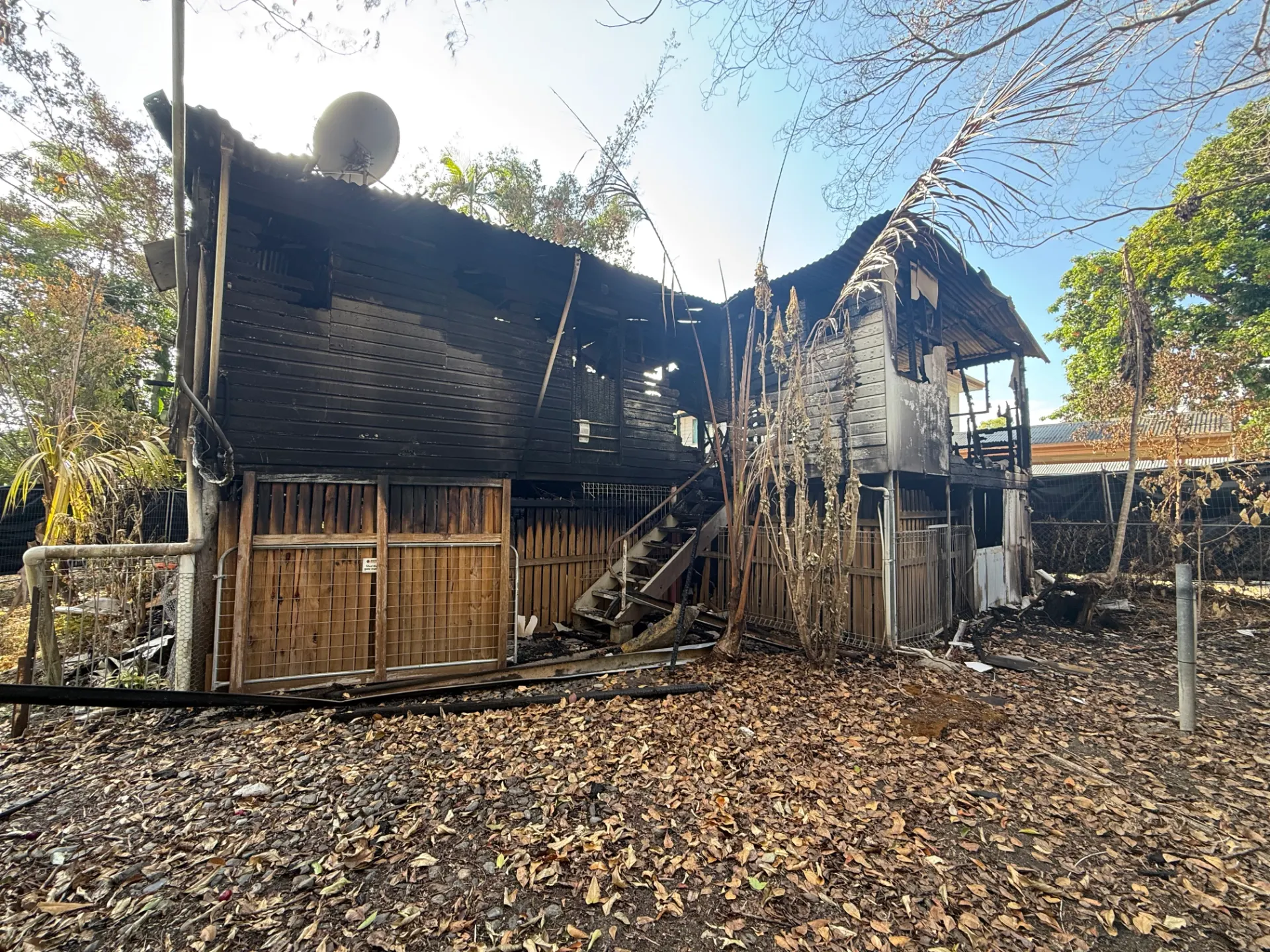
Fire-Damaged Asbestos Demolition
When a building burns, the asbestos cement in it stops being bonded. Heat destroys the binder, firefighting water spreads the debris, and what was a routine sheet removal becomes friable asbestos across the whole site.
BrizPlant demolishes fire, storm and impact-damaged asbestos structures under Class A controls, suppression, containment, air monitoring and independent clearance, and remediates the ground underneath before handing the site back.
What a Friable Demolition Actually Involves
A friable demolition is not a normal knockdown with extra paperwork. The controls run for the whole job, because the material is releasing fibre the entire time the structure is coming down.
Fire & Storm Damaged Structures
Buildings where heat, water or impact has broken down the asbestos cement to the point it can be crumbled by hand. Once that happens the material is friable, regardless of what it was when it was installed.Class A Controlled Demolition
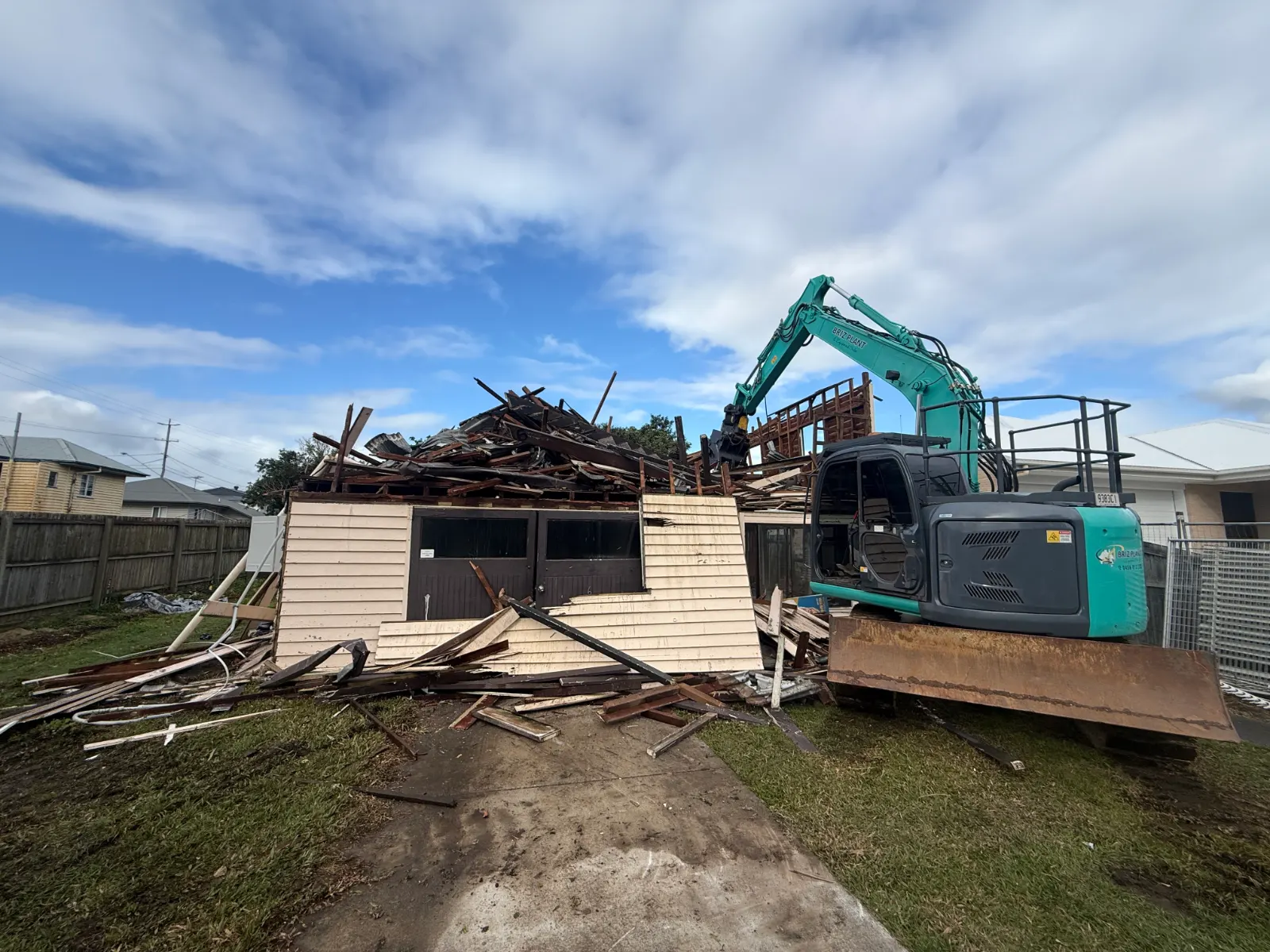
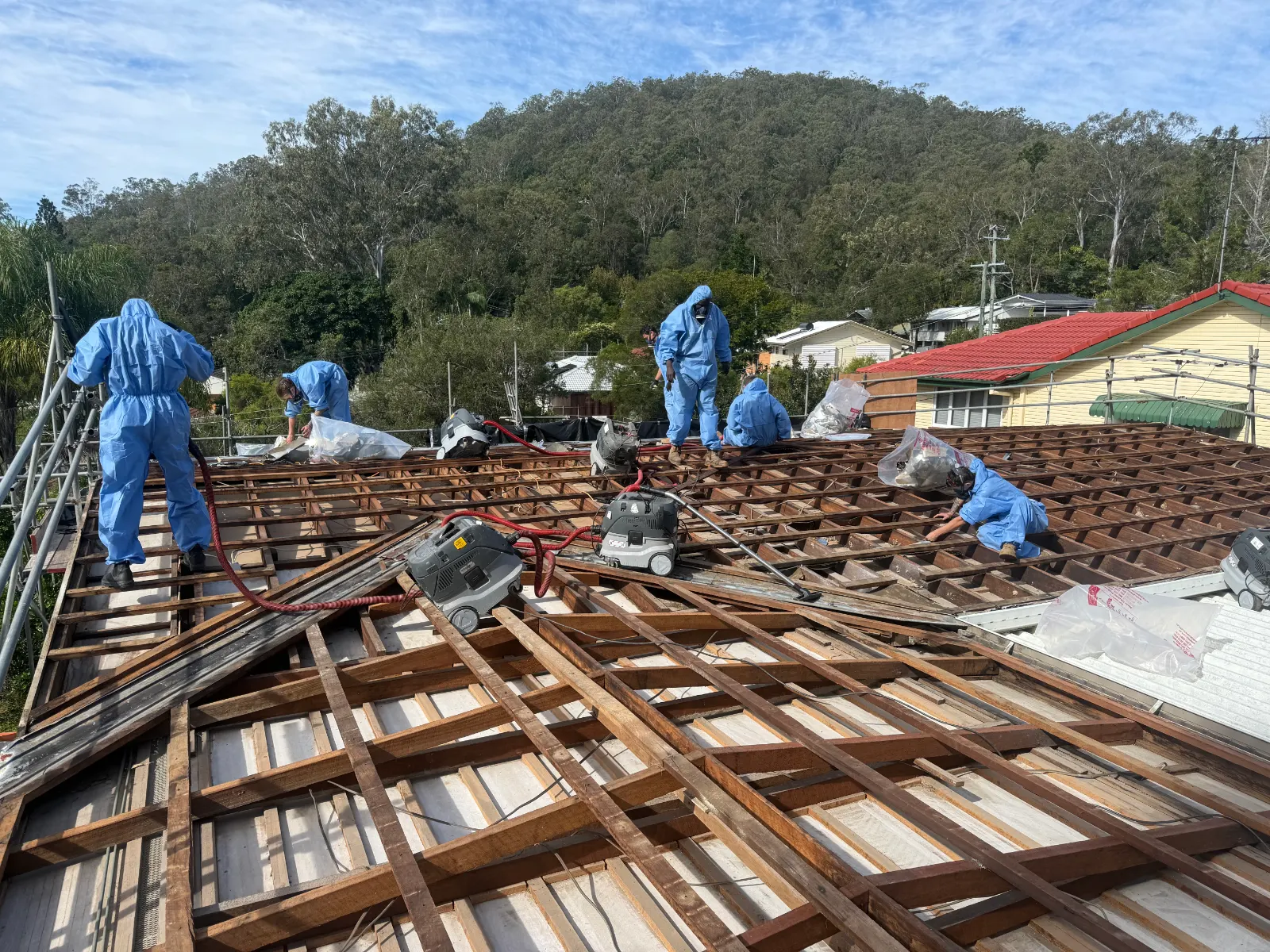
Demolition carried out under Class A controls rather than stripping first, continuous suppression, exclusion zones and containment of the structure while it comes down.Air Monitoring Throughout
Independent licensed assessors monitor airborne fibre levels against the 0.1 fibres/mL exposure standard for the duration of the works, not just at the end.Contaminated Waste Separation
Asbestos-affected material, general demolition waste and contaminated soil are separated on site and tracked to the correct licensed facility.When a Building Becomes a Friable Demolition
Bonded asbestos is only bonded while the cement matrix holding the fibres is intact. Break that down, with heat, water, impact or twenty years of weather, and the same sheet is friable, and the job changes licence class.
House fires
The most common trigger. Heat destroys the binder in asbestos cement sheeting, and the water used to fight the fire spreads the debris through the property and into the soil.Storm and impact damage
Roof sheets shattered by hail or falling trees, and walls opened up by vehicle impact, the material is broken, weathered and no longer intact.Long-term weathering
Sheds, fences and roofs left twenty years past their life. Surface cement has eroded and the fibre matrix is exposed and shedding.Failed or abandoned removals
Partially stripped buildings, unsecured debris and sites where an unlicensed contractor has already broken the material up.Derelict and fire-prone buildings
Vacant structures with squatter damage, vandalism or repeated small fires, where the material condition can no longer be assumed.Contaminated ground beneath
Almost always present after a fire, debris and fragments spread into the surrounding soil, requiring delineation and validation after the structure is gone.How a Friable Demolition Runs
Six stages from first inspection to a cleared, validated and documented site. The notification period is fixed by legislation; everything else moves at the pace of the site.
Book an assessmentAssess & classify
A licensed assessor inspects the structure and confirms the asbestos condition. Where material has degraded, it is classified as friable and the scope moves to Class A regardless of what it was originally.Plan & notify
A site-specific Asbestos Removal Control Plan and SWMS are prepared, and Workplace Health and Safety Queensland is notified a minimum of at least five days before work starts.Secure the site
Exclusion zones, barricading, signage and a decontamination unit are established. Neighbouring properties and any occupied buildings nearby are addressed in the plan.Demolish under control
The structure is brought down under continuous water suppression with the machine operator in a filtered cab. Debris is kept wet, wrapped and loaded directly, never stockpiled dry.Remediate the ground
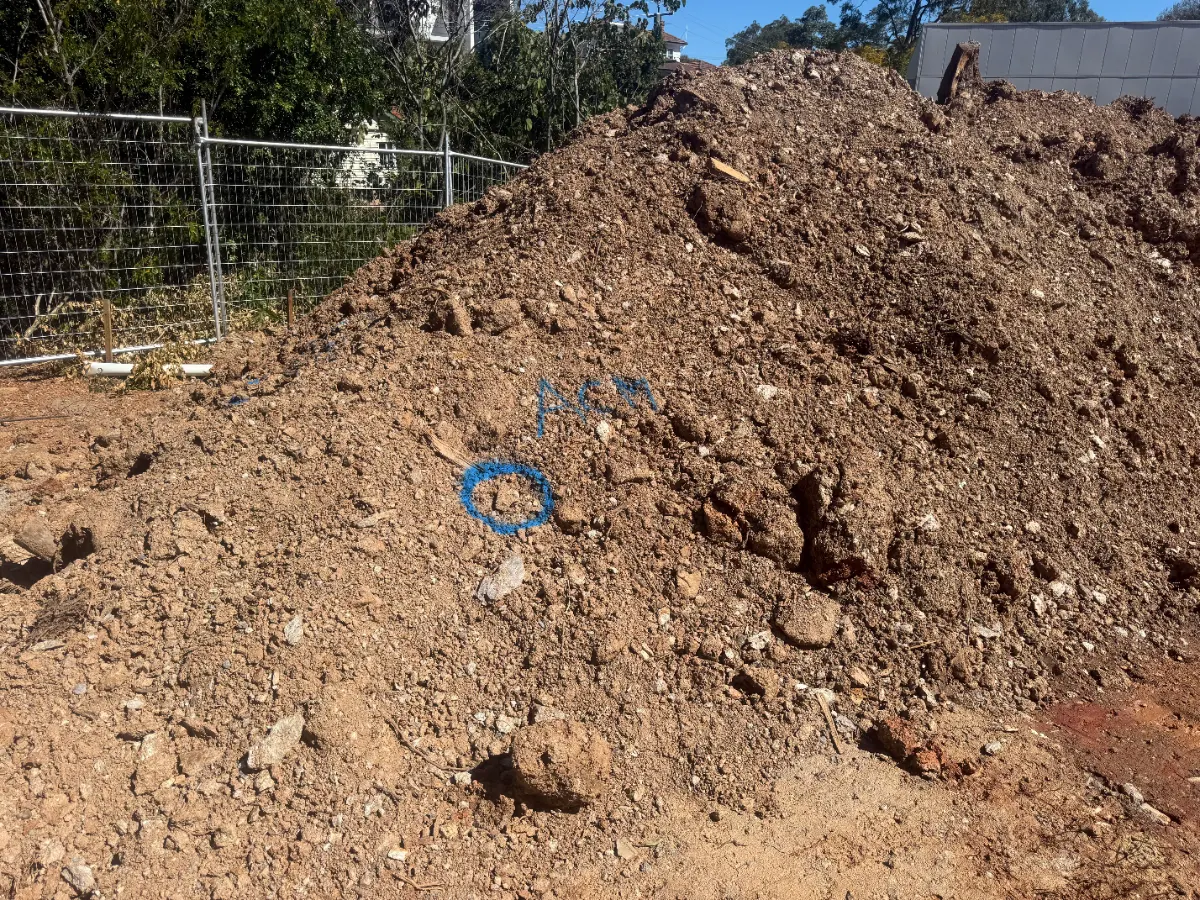
Contaminated soil is delineated, excavated and validated. Fire debris almost always leaves asbestos fragments in the surrounding ground.Clear & document
An independent licensed assessor completes the clearance inspection and issues the certificate. Waste tracking, dockets and the full pack are handed over for the insurance and council file.The Highest Level of Asbestos Control
Friable work carries the strictest controls in the Queensland framework. These are not optional extras, they determine whether the job stands up on the record afterwards.
Fire Damaged Demolition FAQs
Most of these come from insurers, loss adjusters and property owners in the first week after a fire.
Why can't the asbestos just be removed before demolition?
On an intact building it can, and that is the normal sequence. After a significant fire the structure is usually unsound, which makes sending people in to strip material by hand unsafe. That leaves machinery, and the moment mechanical plant is used to disturb asbestos the work has to be carried out under friable conditions and Class A controls: water suppression running throughout, the structure brought down by excavator and the material loaded out as it goes. The demolition becomes the removal method, which is why it takes a Class A licence rather than a demolition contractor and a separate removalist. Sections 452 and 453 of the WHS Regulation require asbestos to be removed before demolition so far as is reasonably practicable, and a duty holder who does not remove it first has to evidence why that was not practicable. A structure that is unsound, or where collapse is imminent, is the exception the regulation contemplates, and the evidence for it is part of what we document.
Is a fire-damaged house always a friable job?
Not always, but assume it is until it has been assessed. Heat and firefighting water break down the cement binder that holds the fibres, so the classification depends on the condition of the material on the day rather than on what product was originally installed. The other half of the test is access: once a structure is unsound and the work has to be done mechanically, friable controls apply regardless of how the sheeting started out. We have the material assessed before pricing.
Who deals with the insurer?
We can work directly with the insurer or loss adjuster and issue documentation in the format they need, scope of works, methodology, air monitoring results, clearance certificate and waste tracking. Most claims stall on missing documentation rather than on the work itself.
How long does a fire-damaged demolition take?
A single-storey house is typically one to two weeks including site setup, notification period, demolition, soil validation and clearance. The WHSQ notification period of at least five days is the fixed part; the rest depends on access, soil contamination and how much of the structure is still standing.
What happens to the soil under the building?
It gets assessed. Fire debris almost always spreads asbestos fragments into the surrounding ground, so the soil is sampled, delineated and, where it is impacted, excavated and validated before the site is signed off. Skipping it leaves the problem for the next contractor and the next owner.
Can you rebuild afterwards?
We do not build, but we hand the site back cleared, validated and documented, with everything a builder or certifier needs to start. Slab and footing removal is quoted separately depending on the rebuild plan.
Scopes That Usually Come With It
Had a fire on an asbestos building?
Keep everyone out of the debris and do not attempt to clean it up. Call us and we will contain the site first, then price the demolition.